
Crawl Budget Explained (and How to Fix It)
Crawl budget is the number of URLs Googlebot is willing to crawl on your site in a given day. If you have more pages than budget, some of them — often your important new ones — simply don't get crawled.
For most small sites it's a non-issue. But it's worth understanding, because wasting crawl budget is a silent way to delay your own indexing.
When crawl budget actually matters
Google's own guidance: crawl budget "mostly matters for big sites." If you have fewer than a few thousand pages, Google can generally crawl everything on schedule. The problems start when you have:
- Thousands of pages (e-commerce, directories, programmatic SEO).
- A large volume of low-value or duplicate URLs.
- A slow server that makes crawling expensive.
What wastes crawl budget
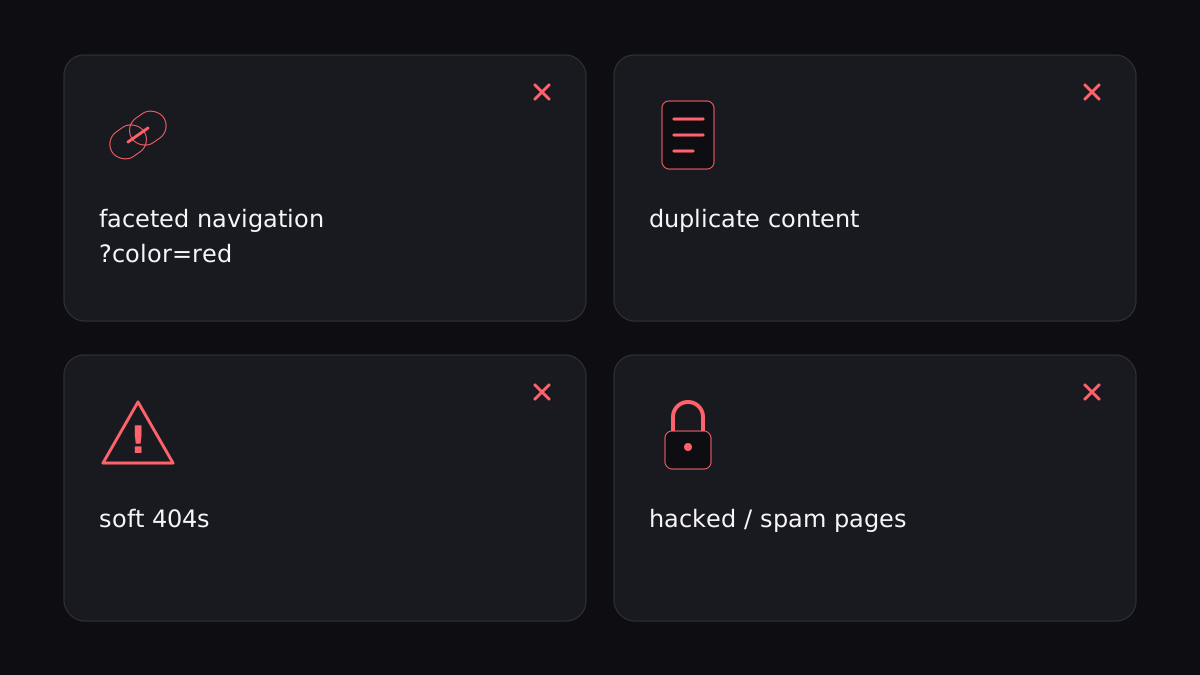
Four things consume budget without returning value:
- Faceted navigation — /?color=red&size=large generates near-infinite URL variations.
- Duplicate content — printer versions, session IDs, tracking parameters.
- Soft 404s — pages that return 200 but are effectively empty.
- Hacked or spam pages — Google slows down crawling a compromised site.
How to fix it
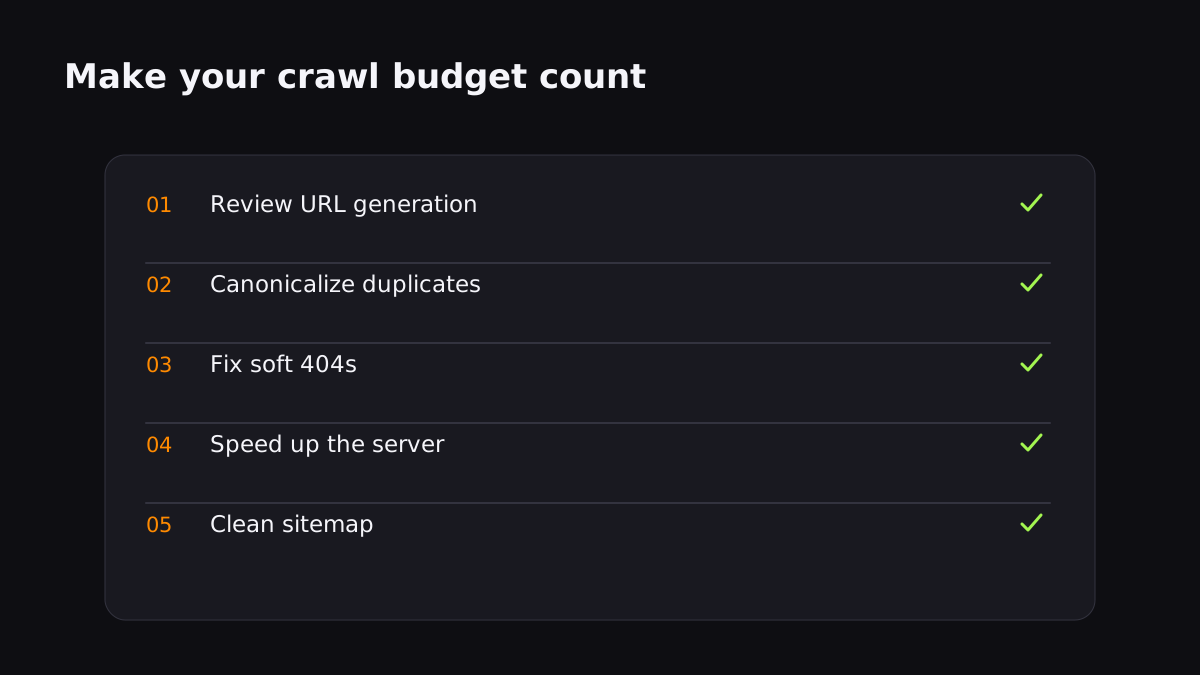
- Block junk in robots.txt — disallow parameter URLs, search results, and anything that shouldn't be indexed.
- Canonicalize duplicates — point every variation at the one URL that should rank.
- Fix soft 404s — return a real 404 or 410, or add content.
- Speed up the server — a slow response makes Google crawl fewer pages. Fast pages also help on large sites.
- Keep the sitemap clean — list only URLs you want indexed.
The bigger lesson
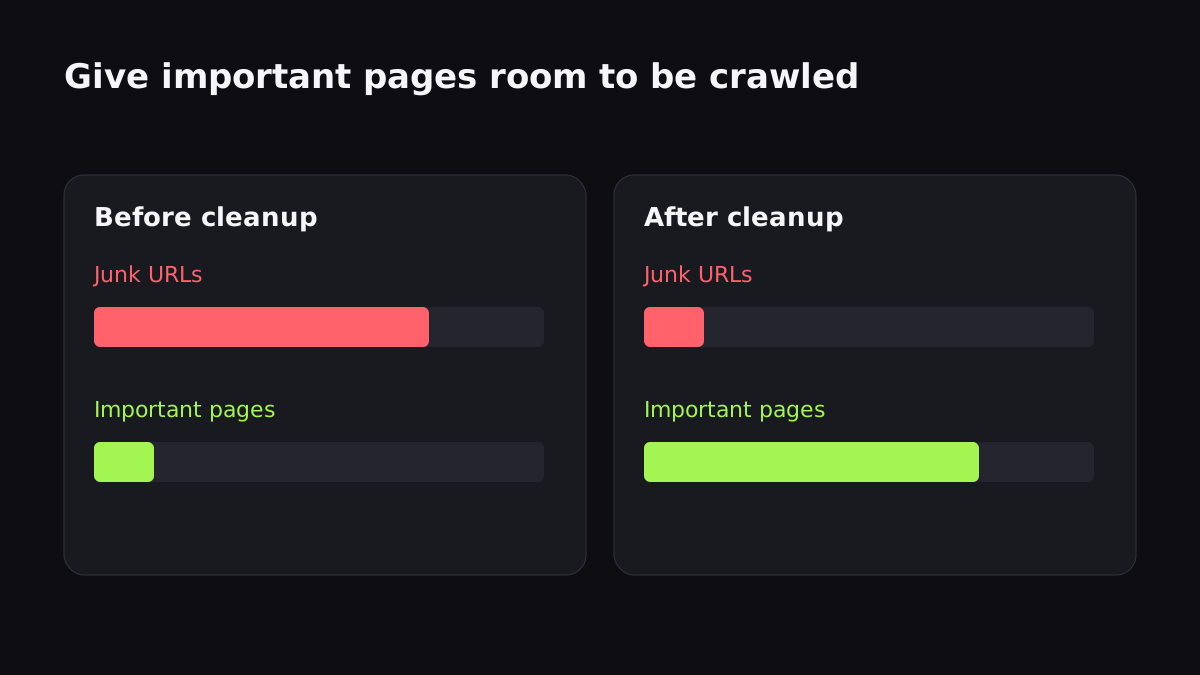
Crawl budget is mostly a symptom of a messy site, not a thing you tune directly. Clean up the junk and your important pages get crawled sooner. And for the pages you need in Google now — a new post, a product launch — don't wait for budget to free up; push them. Notify Googlebot directly and skip the crawl queue.
FAQ
Does my small site need to worry about crawl budget?
Usually no. Google says a current sitemap and regular Page Indexing report checks are enough for smaller sites.
Can I increase my crawl budget?
You can't set it directly, but you can make better use of it: remove junk URLs, speed up the server, and keep your sitemap clean so Google spends its crawl on pages that matter.
What's a soft 404?
A page that returns HTTP 200 but has no real content (an empty category, a "no results" page). Google treats it as a waste of crawl budget.
Submit your URLs and get them indexed in minutes, not days.
Index your first URL