
How to Get a New Blog Post Indexed Fast
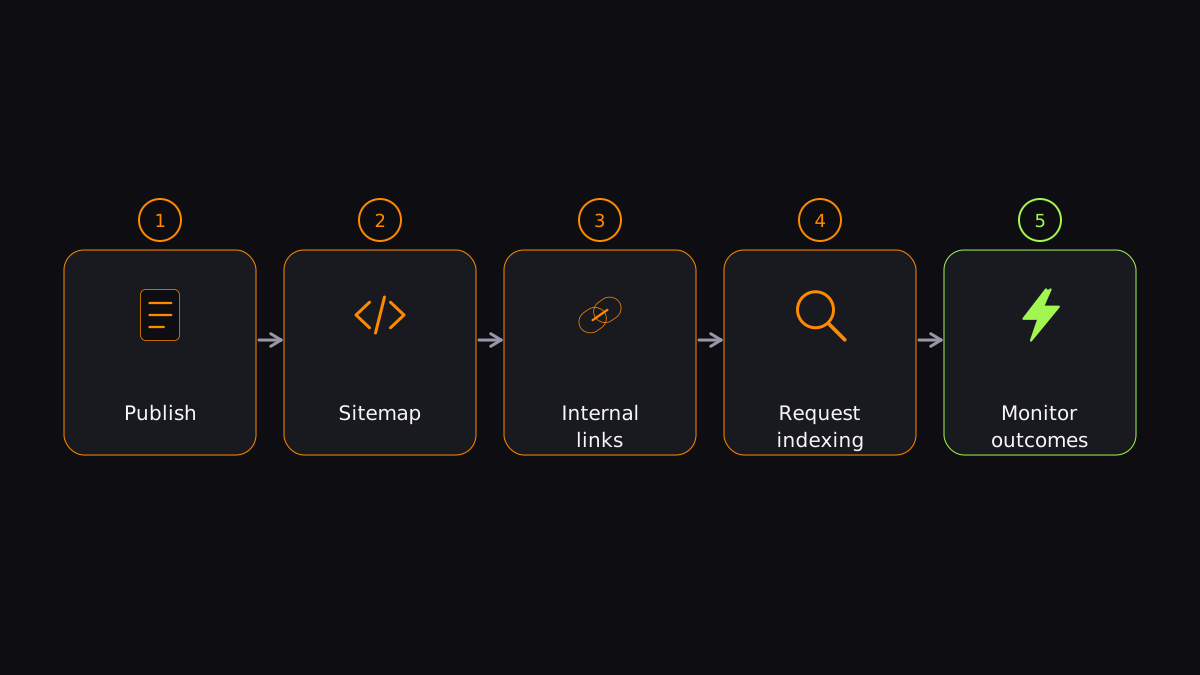
To get a new blog post indexed fast, do five things in order: publish, ping your sitemap, add internal links, request indexing, and push a notification to Googlebot. Done together, these take a post from "maybe next week" to "crawled within minutes."
Here's the exact workflow, with the why behind each step.
1. Publish a complete, indexable page
Indexing speed is pointless if the page isn't indexable. Before anything else, confirm:
- No
noindextag. - Not blocked by robots.txt.
- A self-referencing canonical URL.
- Real, original content (not a stub or a thin draft).
2. Keep your sitemap fresh
Add the new URL to your XML sitemap and make sure the sitemap is referenced in robots.txt. If your CMS does this automatically, verify it actually happened — a stale sitemap is a silent killer.
For a fast re-crawl, update the <lastmod> date on the URL. Google re-reads sitemaps on its own schedule, so this alone is slow — but it's the baseline every other step builds on.
3. Add internal links immediately
Google discovers most new pages by following links, not by reading sitemaps. Link to the new post from:
- Your homepage or a "latest posts" section.
- A relevant category or hub page.
- Two or three older related posts.
Internal links are the single strongest free discovery signal you control.
4. Request indexing in Search Console
For a genuinely important post, open URL Inspection, paste the URL, and click Request indexing. It's capped at roughly 10–20 requests a day, so save it for posts that matter — don't burn it on routine content.
5. Push a notification to Googlebot
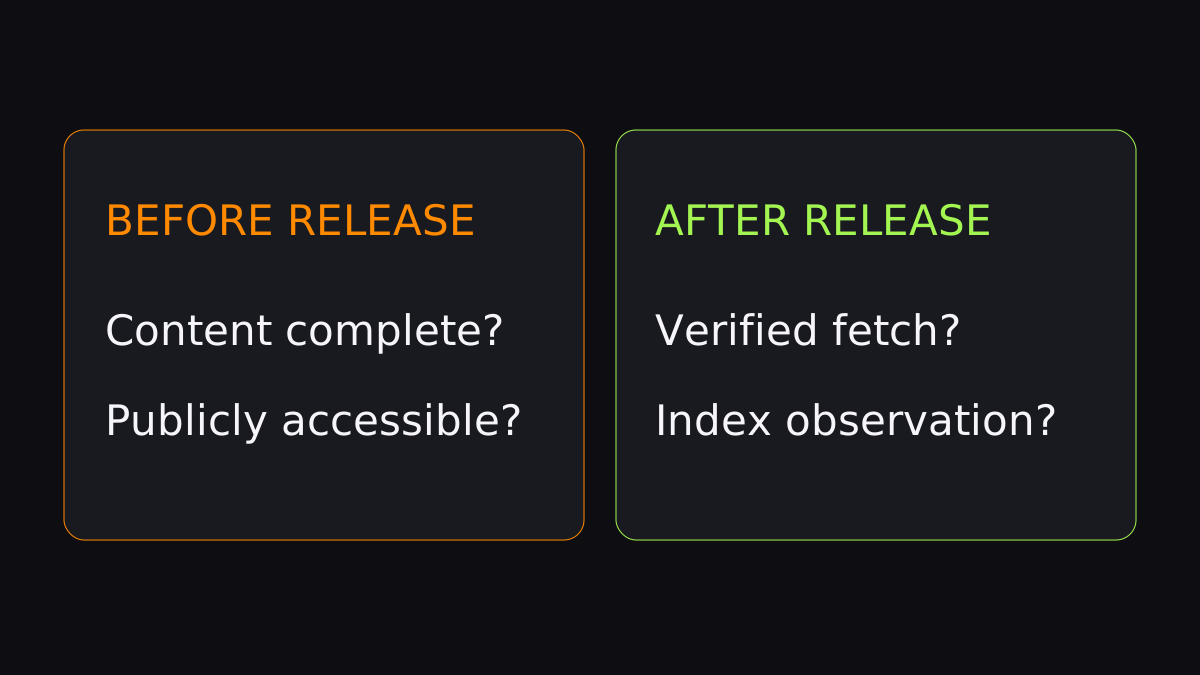
This is the step that actually compresses the wait. A push notification tells Googlebot "new content here" immediately, instead of waiting for it to stumble across the page. On a typical site, this takes first crawl from ~74 hours (sitemap alone) down to minutes.
Because Search Console is manual and the Indexing API is out of scope for blog posts, a service like Truva Indexer is the practical way to do this at publishing scale.
Bonus: cover Bing and ChatGPT too
Fire an IndexNow ping on publish. It's free and gets your post into Bing and — via Bing's index — ChatGPT Search within a couple of hours. It costs nothing and adds a second traffic channel.
The full checklist
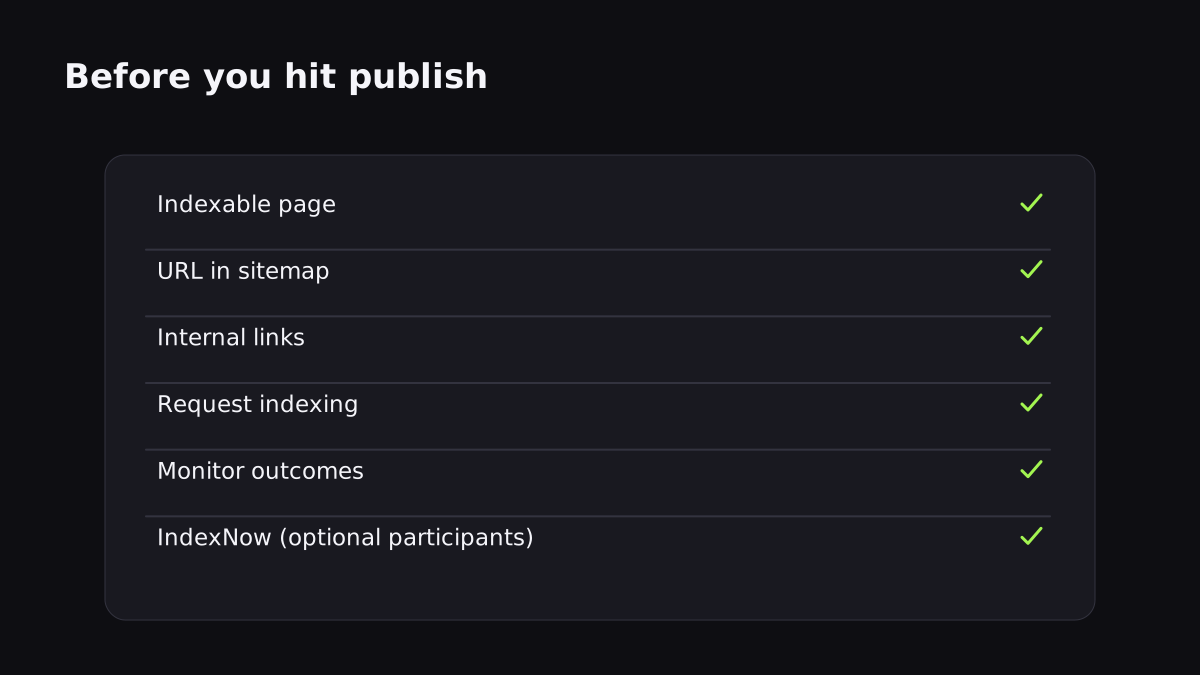
- Page is indexable (no noindex, no robots block, canonical set).
- URL is in the sitemap with a fresh lastmod.
- Internal links point to the post.
- Request indexing in Search Console (if important).
- Push a Googlebot notification.
- Ping IndexNow for Bing/ChatGPT.
Run that on every publish and you'll stop wondering why posts take two weeks to show up. Start indexing your posts faster.
FAQ
How fast can a blog post get indexed?
With a push notification, Googlebot usually arrives in 12–35 minutes, and the post appears in the index within 2–8 hours. With a sitemap alone, it's typically 3+ days.
Should I request indexing for every post?
No. Search Console caps requests around 10–20 per day, so save them for your most important pages and automate the rest with a sitemap + push service.
Do internal links really matter for indexing?
Yes — they're a stronger discovery signal than a sitemap. A page with no internal links relies entirely on Google stumbling across it.
Submit your URLs and get them indexed in minutes, not days.
Index your first URL