
Google Indexing API vs IndexNow vs Services: What Works
Here's the honest version: the Google Indexing API is officially only for job postings and livestreams, and IndexNow doesn't notify Google at all. If you publish regular content and want it in Google fast, a third-party service is usually the only option that actually does the job.
The three "push" methods sound interchangeable but solve completely different problems. Here's the breakdown.
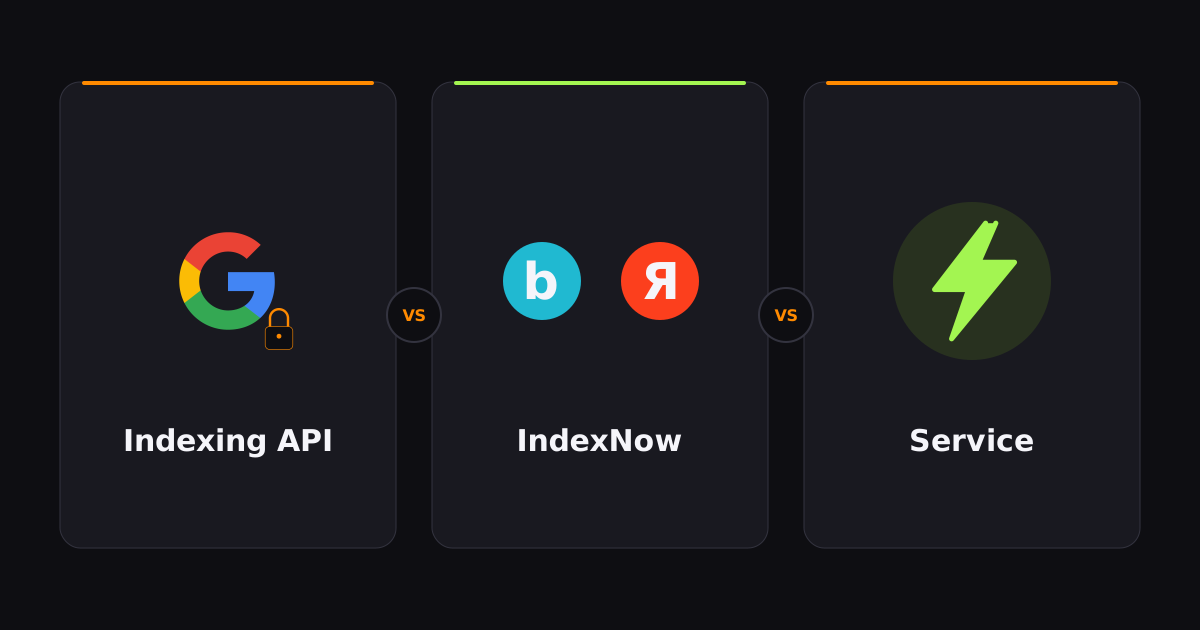
Google Indexing API — powerful but out of scope
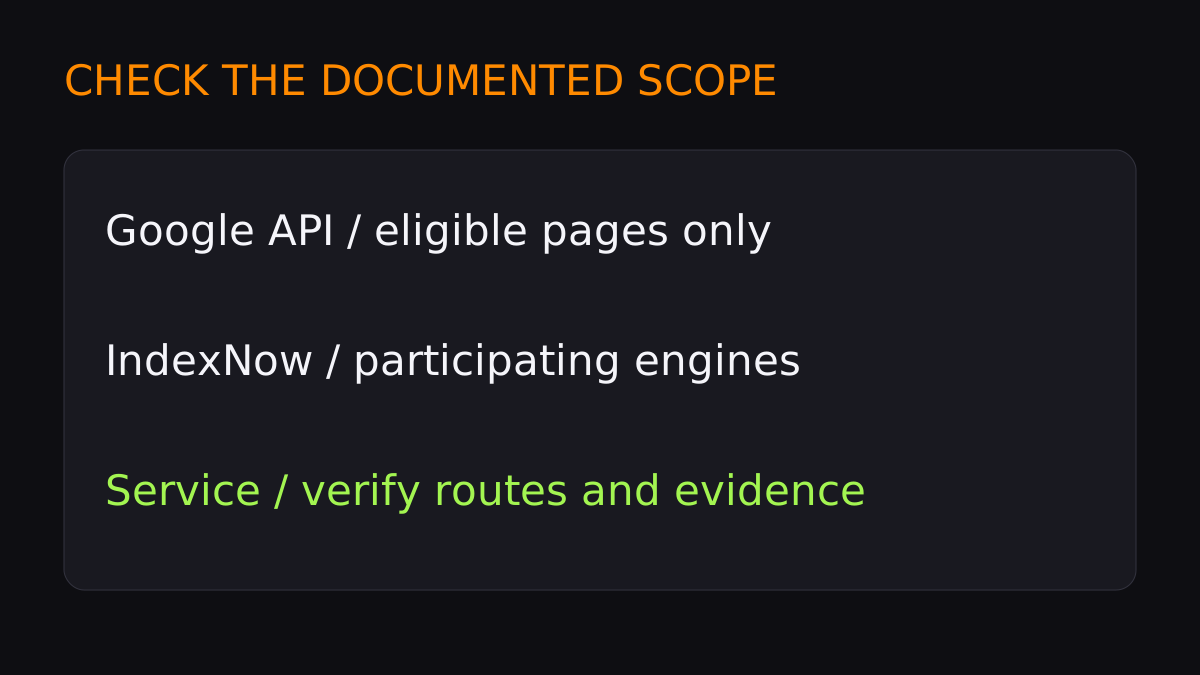
The Indexing API lets you notify Google programmatically about new or updated URLs. The catch: Google documents it only for pages with JobPosting or BroadcastEvent schema.
- Speed: minutes for eligible content.
- Quota: 200 notifications/day per Cloud project.
- Setup: moderate — a Google Cloud project, a service account, OAuth and JWT signing.
- Risk: using it for blog posts "works" for some people but is out of spec, and Google can tighten enforcement anytime.
IndexNow — great, but not for Google
IndexNow is an open push protocol. One HTTP POST pings Bing, Yandex, Seznam and Naver within minutes. It's free, has a ~10,000 URL/day ceiling, and requires only a key file on your domain.
- Speed: Bingbot arrives in 6–22 minutes on average.
- The catch: Google does not participate. If Google is your main traffic source, IndexNow does nothing for you there.
- Bonus: because ChatGPT Search reads Bing's index, IndexNow can get your content cited in ChatGPT within ~2 hours.
Paid indexing services — the gap-filler
Services like Truva Indexer sit in the gap the two free options leave behind: they notify Googlebot about regular content (blog posts, product pages, landing pages) that the Indexing API won't touch and IndexNow can't reach.
- Speed: Googlebot typically arrives in 12–35 minutes, indexed in 2–8 hours.
- Volume: 100–500 URLs/day depending on plan.
- The caveat: quality filters matter — aggressive submission of thin pages can lead to them being dropped later.
Side-by-side
| Indexing API | IndexNow | Paid service | |
|---|---|---|---|
| Reaches Google | Yes (restricted) | No | Yes |
| Reaches Bing/Yandex | No | Yes | No |
| Page types | Jobs, videos | Any | Any |
| Daily volume | 200 | ~10,000 | 100–500 |
| Setup | Hard | Easy | None |
| Cost | Free | Free | $5–$50/mo |
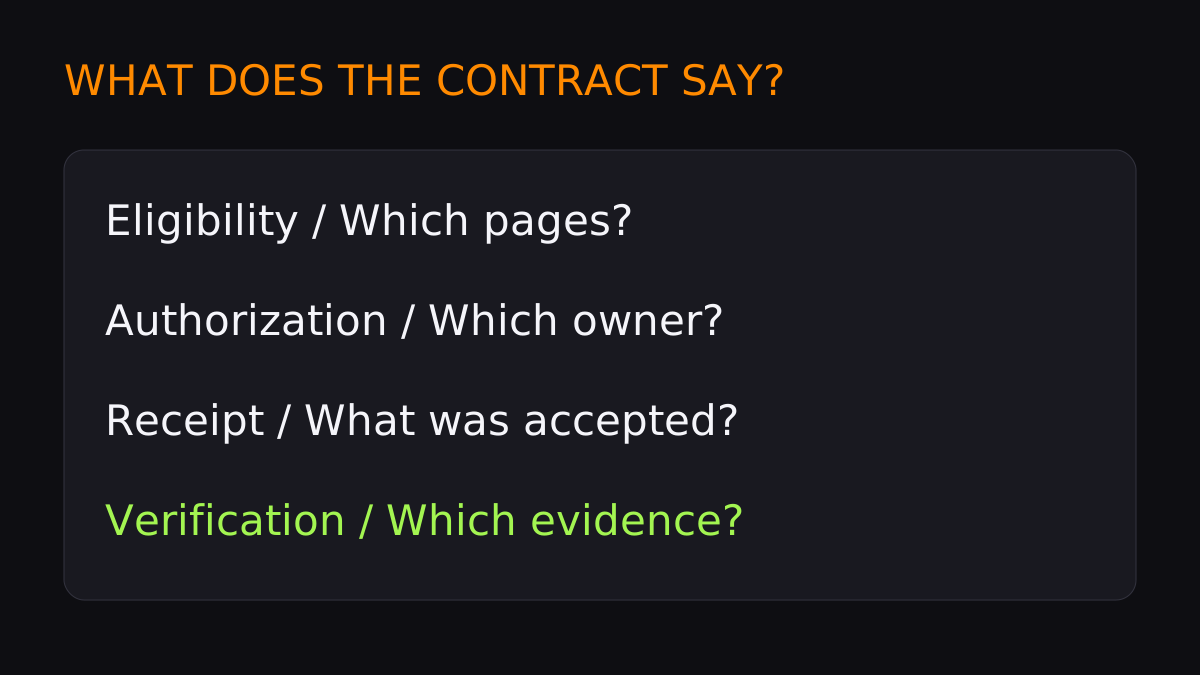
The right setup for most sites
You don't have to choose one. The highest-performing sites run a hybrid:
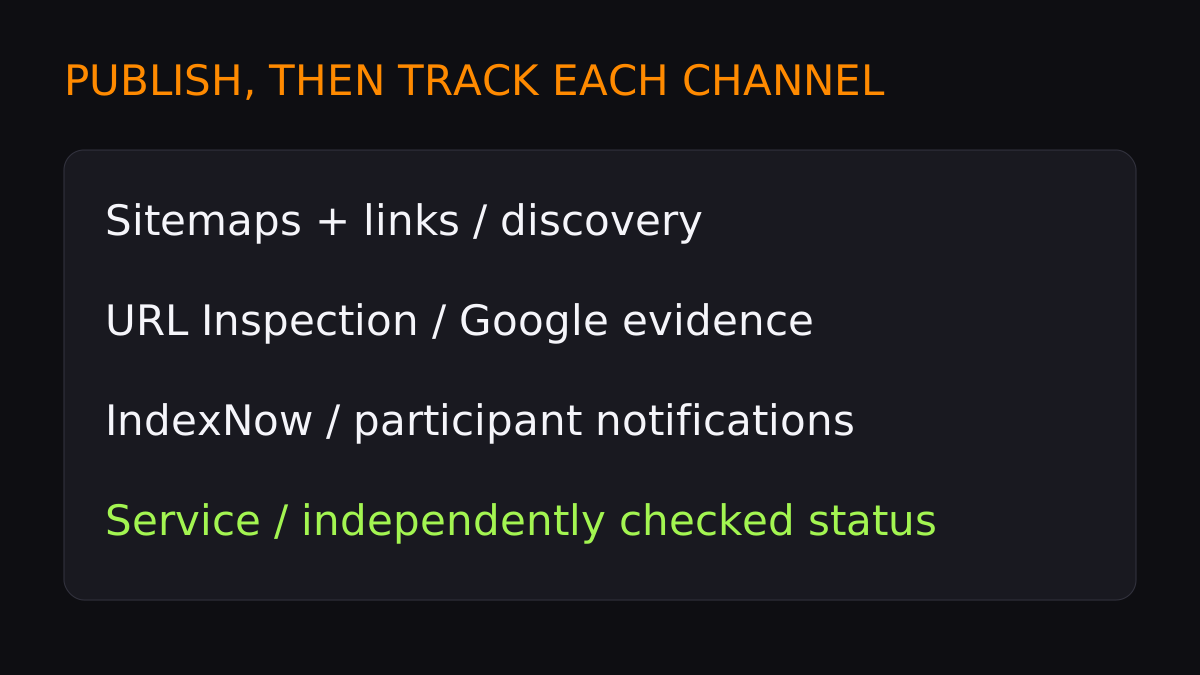
- Sitemap as the baseline (always).
- IndexNow on every publish (free Bing/ChatGPT coverage).
- A paid service for Google, where your real traffic lives.
- URL Inspection manually for your one or two most important pages.
If Google is the channel that pays your bills, the Indexing API and IndexNow both leave you uncovered for regular content. Submit your URLs and get Googlebot notified the moment you publish.
FAQ
Does IndexNow work for Google?
No. IndexNow notifies Bing, Yandex, Seznam, Naver and Yep. Google does not support it, so it has no effect on Google indexing.
Is it safe to use the Indexing API for blog posts?
It's out of Google's documented scope. It often works, but you're relying on unofficial behavior that Google can change at any time.
Which method is fastest overall?
For Google on regular content, a push service is fastest (Googlebot in ~12–35 minutes). IndexNow is fastest for Bing and ChatGPT Search.
Submit your URLs and get them indexed in minutes, not days.
Index your first URL